

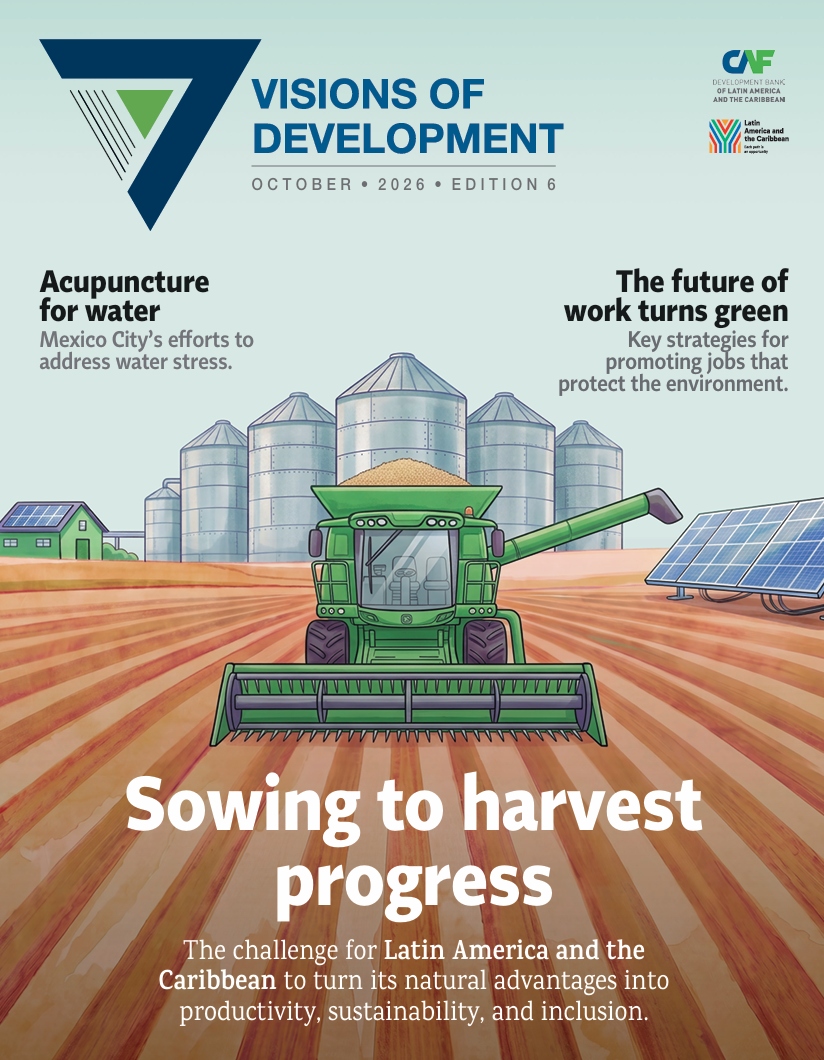
N°6 Visions of Development. Sowing to harvest
Resumo
Latin America and the Caribbean is the most urbanized region in the world, the result of decades of migration from rural areas to cities driven by industrialization, the search for better opportunities, and inequalities in access to basic services. However, the region possesses enormous rural potential due to its abundance of natural resources, fertile land, water, and biodiversity, positioning it as a strategic player in global food security and sustainable development. Despite these advantages, rural areas continue to face high levels of poverty, limited access to public services, and fewer formal employment opportunities. The report highlights how sectors such as agriculture, mining linked to the energy transition, tourism, the bioeconomy, renewable energy, and value-added natural resource industries can become key drivers of growth and inclusion. Nevertheless, realizing these opportunities will require overcoming challenges related to land tenure, infrastructure, innovation, and climate change. In this context, the report calls for coordinated action and effective policies to reduce territorial disparities and transform rural development into a source of shared prosperity across the region.
Assunto
País / Región
Data
2026-10Cite esta publicação
Item que pertence à coleção

Exceto quando indicado o contrário, a licença deste item é descrito como CC-BY-NC-ND
Items Relacionados
RED 2026 - Chapter 1: A new horizon of opportunities for rural areas
The economic development of Latin America and the Caribbean (LAC) is deeply intertwined with the trajectory of its rural areas. These areas are home to ...
RED 2026 - Chapter 5: Forestry, fisheries, aquaculture, and tourism as engines of local development
Forestry, fishing, aquaculture, and tourism play a significant role in rural economies by generating local employment, diversifying community income, ...
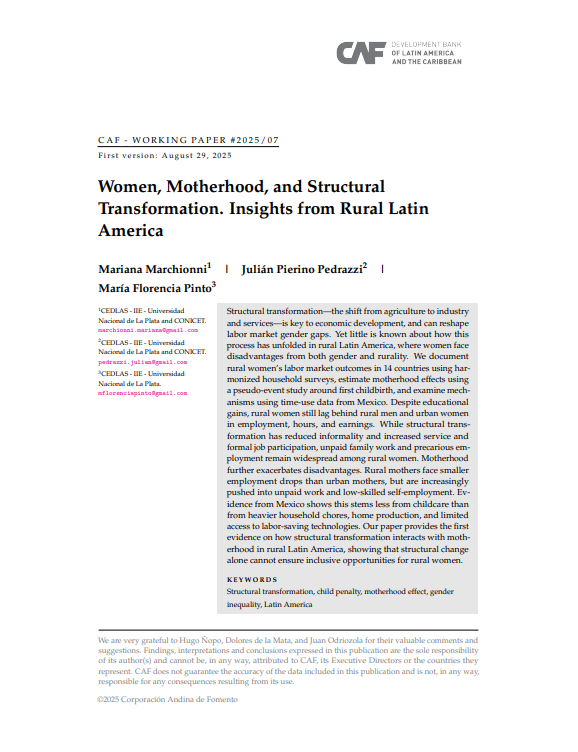
Women, Motherhood, and Structural Transformation. Insights from Rural Latin America
Structural transformation—the shift from agriculture to industry and services—is key to economic development and can reshape labor market gender gaps. ...