

RED 2026 - Chapter 7: Employment, income, and vulnerability in rural areas
Resumo
Rural areas in Latin America and the Caribbean face deep-seated inequalities. Although rural poverty has declined significantly over the past two decades, it still affects one-third of the population—twice the rate in urban areas. Limited access to basic services, poor infrastructure, and fewer job opportunities create a context of greater vulnerability for rural households. This chapter analyzes how rural families generate income and how their livelihood strategies have evolved in the context of the region’s economic transformations. The analysis highlights the heterogeneity of the rural world and the persistent gaps associated with low productivity, informality, and limited income diversification, which particularly affect the most vulnerable groups, such as women and indigenous populations. Finally, the chapter discusses policies aimed at strengthening social protection and productive inclusion, promoting labor formalization, and expanding economic opportunities in rural areas.
Assunto
País / Región
Data
2026-04-13Cite esta publicação
Item que pertence à coleção
Items Relacionados
RED 2026 - Chapter 5: Forestry, fisheries, aquaculture, and tourism as engines of local development
Forestry, fishing, aquaculture, and tourism play a significant role in rural economies by generating local employment, diversifying community income, ...
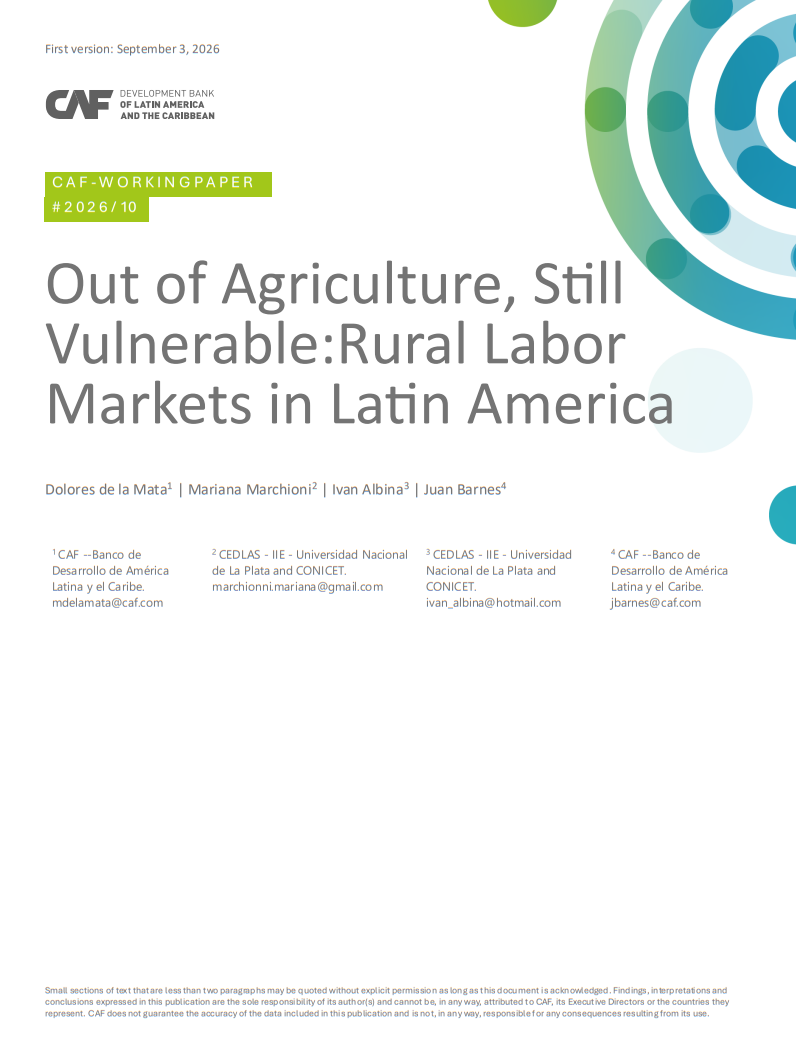
Out of Agriculture, Sill Vulnerable: Rural Labor Markets in Latin America
Rural poverty has declined substantially in Latin America over the past two decades, yet vulnerability remains high and rural–urban gaps persist. This ...
RED 2026 - Chapter 8: Access to quality services for comprehensive rural development
Access to quality infrastructure and basic services is a fundamental pillar of household well-being and productive development. However, low population ...