

Roots for the future: A new rural landscape in Latin America and the Caribbean
Resumen
The 2026 edition of CAF’s Report on Economic Development (RED) places rural areas in Latin America and the Caribbean at the center of the development agenda. These areas are home to strategic assets for the region—fertile land, biodiversity, forests, energy sources, and critical minerals—and a population of nearly 120 million people, making them pillars of food security, the energy transition, and environmental sustainability. Through a detailed analysis, the report shows how, despite significant progress in productive modernization and increases in agricultural productivity, significant gaps persist in poverty, informality, infrastructure, and access to basic services, along with a decline in agricultural employment and marked territorial and sectoral disparities. The document also identifies opportunities to strengthen value chains and diversify the productive base in key sectors—agriculture and agribusiness, mining and energy, fisheries and aquaculture, forestry, and tourism—in a context of growing global demand for sustainable goods and increasing risks associated with climate change and price volatility.
Materia
País / Región
Fecha
2026-04-14Citar de esta publicación
Item perteneciente a la Colección


Excepto si se señala otra cosa, la licencia del ítem se describe como CC-BY-NC-ND
Items Relacionados
RED 2026 - Chapter 1: A new horizon of opportunities for rural areas
The economic development of Latin America and the Caribbean (LAC) is deeply intertwined with the trajectory of its rural areas. These areas are home to ...
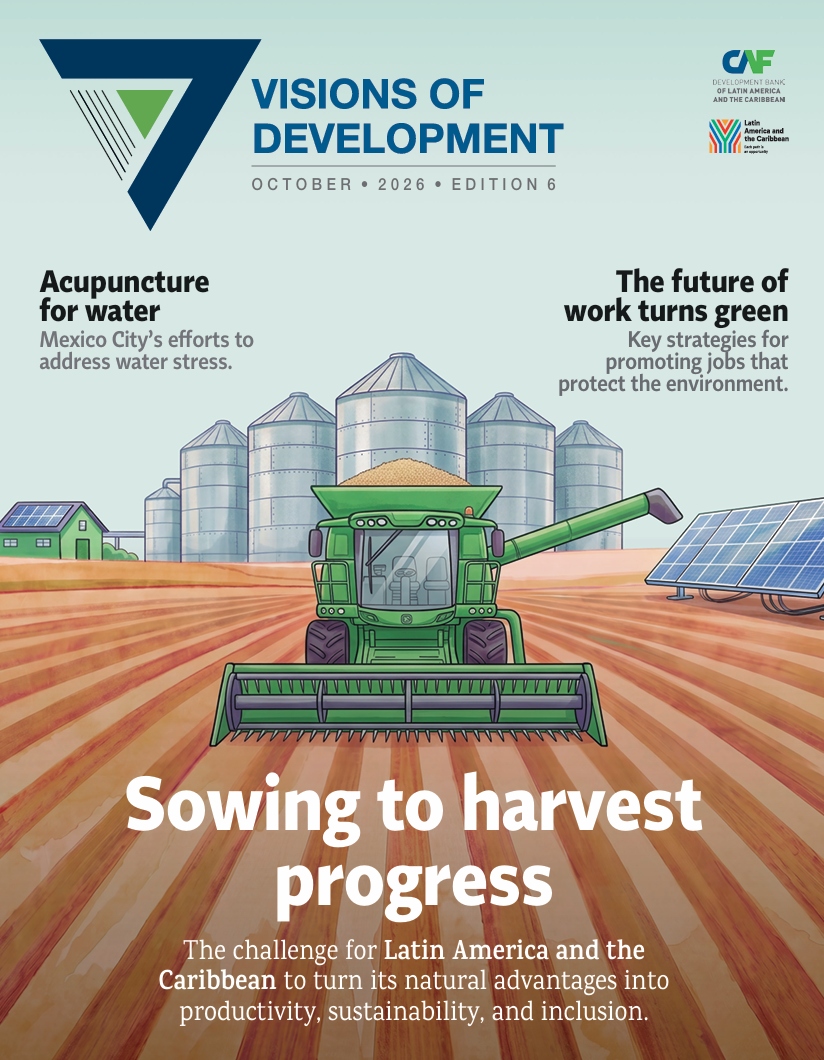
N°6 Visions of Development. Sowing to harvest
Latin America and the Caribbean is the most urbanized region in the world, the result of decades of migration from rural areas to cities driven by ...
RED 2026 - Chapter 2: The agricultural sector in Latin America and the Caribbean
Agriculture and livestock play a significant role in the economies of Latin America and the Caribbean. Together, they account for nearly 6% of the ...